The Ultimate Guide to Email Marketing Funnels that Convert
Email marketing funnels are the backbone of successful digital marketing campaigns. When done right, they can transform casual subscribers into loyal customers. In this comprehensive guide, we’ll explore how to build and optimize email marketing funnels that actually convert.
What is an Email Marketing Funnel?
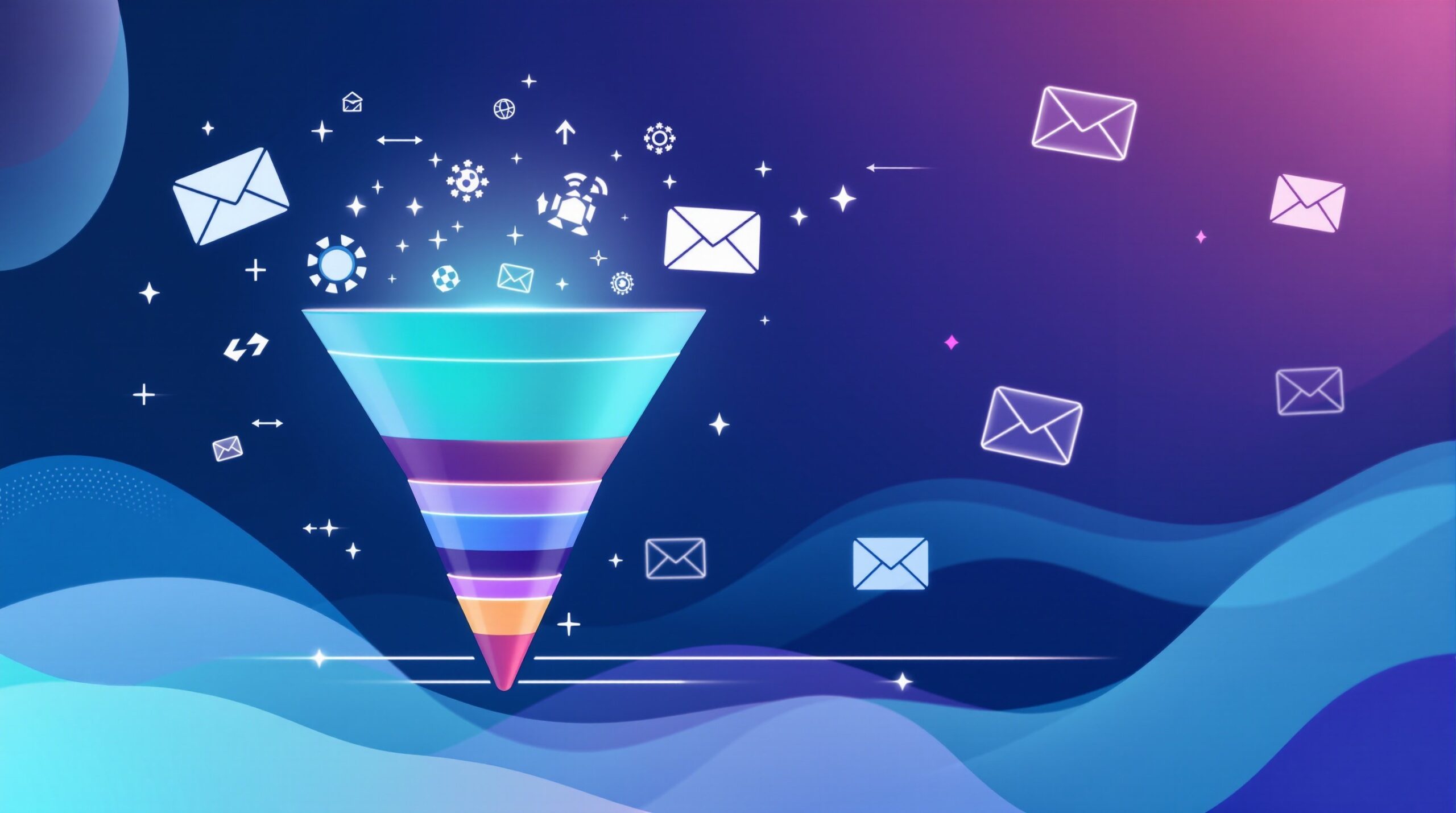
An email marketing funnel is a strategic sequence of automated emails designed to guide subscribers through a journey—from initial awareness to final purchase. Unlike one-off email blasts, a well-crafted funnel nurtures leads systematically, building trust and demonstrating value at each stage.
The typical email marketing funnel consists of several key stages:
- Awareness Stage: Capturing attention and building initial interest
- Consideration Stage: Educating prospects and showcasing solutions
- Decision Stage: Providing compelling reasons to purchase
- Retention Stage: Maintaining engagement and encouraging repeat business
According to recent data, businesses that use email marketing funnels see conversion rates up to 50% higher than those relying on sporadic email campaigns.
Step-by-Step: Building Your First Funnel
Building your first email funnel doesn’t have to be overwhelming. Here’s a proven step-by-step approach:
Step 1: Define Your Funnel Goals
Start by identifying what you want to achieve. Are you looking to:
– Generate product sales?
– Book consultation calls?
– Drive webinar registrations?
– Increase course enrollments?
Clear goals will shape every aspect of your funnel design.
Step 2: Map Your Customer Journey
Understanding your audience’s path to purchase is critical. Consider:
– What problems are they trying to solve?
– What objections might they have?
– What information do they need at each stage?
This customer journey mapping exercise ensures your emails address real concerns and provide genuine value.
Step 3: Create Your Lead Magnet
Your lead magnet is the irresistible offer that convinces visitors to join your email list. Effective lead magnets include:
– Comprehensive guides or ebooks
– Exclusive templates or checklists
– Free trials or demos
– Webinar access
– Discount codes
The key is offering something valuable enough that people willingly exchange their email address for it.
Step 4: Design Your Email Sequence
Now comes the heart of your funnel. A typical sequence might include:
- Welcome Email (Day 0): Thank subscribers and deliver your lead magnet
- Value Email (Day 2): Share helpful content related to their interests
- Story Email (Day 4): Build connection through case studies or testimonials
- Offer Email (Day 6): Present your product or service
- Urgency Email (Day 8): Create scarcity with limited-time offers
- Last Chance Email (Day 10): Final reminder before offer expires
Each email should have a clear purpose and move subscribers closer to conversion.
Step 5: Set Up email automation
Modern email platforms make automation straightforward. Configure your sequence to:
– Trigger based on subscriber actions
– Segment audiences by behavior
– Personalize content dynamically
– Track engagement metrics
Learn more about advanced email segmentation strategies
Optimizing Your Funnel for Maximum Conversions
Building your funnel is just the beginning. conversion optimization is where the real magic happens.
A/B Test Everything
Test these critical elements:
– Subject lines: Try different lengths, tones, and personalization
– Send times: Experiment with different days and times
– Email copy: Test long-form vs. short-form content
– CTAs: Compare button text, colors, and placement
– Images: Test with and without visuals
Even small improvements can significantly impact your conversion rates.
Analyze Your Metrics
Monitor these key performance indicators:
– Open rates: Are your subject lines compelling?
– Click-through rates: Is your content engaging?
– Conversion rates: Are subscribers taking desired actions?
– Unsubscribe rates: Are you providing value?
– Revenue per email: What’s your ROI?
Use these insights to refine your approach continuously.
Segment Your Audience
Not all subscribers are the same. Create segments based on:
– Engagement level (active vs. inactive)
– Purchase history
– Interests and preferences
– Demographics
– Behavior patterns
Targeted emails consistently outperform generic broadcasts.
Optimize Your Landing Pages
Your funnel doesn’t exist in isolation. Ensure your landing pages are optimized for conversions to maximize the effectiveness of your email traffic.
Tools and Platforms for Funnel Automation
The right tools can make or break your funnel success. Here are top platforms for email automation:
All-in-One Solutions
- ActiveCampaign: Powerful automation with CRM integration
- ConvertKit: Creator-focused with intuitive visual builders
- Drip: E-commerce-optimized with advanced segmentation
Specialized Tools
- Mailchimp: Great for beginners with free tier
- GetResponse: Includes webinar functionality
- Klaviyo: Best for e-commerce businesses
Integration Essentials
- Zapier: Connect your email platform with other tools
- Unbounce: Create high-converting landing pages
- Google Analytics: Track funnel performance
Choose platforms that integrate seamlessly with your existing tech stack and scale with your business.
Case Study: A Successful Email Funnel in Action
Let’s examine a real-world example of a successful email funnel in action.
The Challenge
Sarah, a fitness coach, struggled to convert her social media followers into paying clients. Despite having 10,000 Instagram followers, she was only booking 2-3 clients per month.
The Solution
Sarah implemented a strategic email marketing funnel:
Lead Magnet: “7-Day Home Workout Challenge” (free PDF guide)
Email Sequence:
1. Day 0: Welcome + workout guide delivery
2. Day 2: Success story from previous client
3. Day 4: Common workout mistakes (educational content)
4. Day 6: Introduction to her coaching program
5. Day 8: Limited-time discount offer
6. Day 10: Final call with bonus included
The Results
Within 90 days, Sarah’s funnel generated:
– 1,200 new email subscribers
– 18% conversion rate from subscriber to consultation call
– 42% conversion rate from consultation to paying client
– 15 new clients per month (5x increase)
– $45,000 in additional revenue
The key to Sarah’s success was providing genuine value upfront, building trust through storytelling, and making a compelling offer at the right time.
Key Takeaways
Sarah’s funnel worked because it:
– Addressed a specific pain point (home workouts)
– Delivered immediate value (free challenge)
– Built credibility (client testimonials)
– Created urgency (limited-time offer)
– Maintained consistent communication
Conclusion
Building email marketing funnels requires strategy, testing, and continuous optimization. By following the framework outlined in this guide, you can create email sequences that nurture leads effectively and drive consistent conversions.
Remember these essential principles:
– Start with clear goals and audience understanding
– Provide value before asking for the sale
– Test and optimize relentlessly
– Use the right tools for your needs
– Learn from successful case studies
Ready to take your email marketing to the next level? Start by mapping out your customer journey and crafting your first lead magnet today. For more strategies on driving traffic to your marketing campaigns, check out our comprehensive guide.
About ArcticMarketer: We help digital marketers master the strategies and tools needed to succeed in today’s competitive landscape. Subscribe to our newsletter for weekly insights on lead nurturing, conversion optimization, and more.